'Bringing Food to the People': How West Side Campaign Against Hunger Is Combatting Food Insecurity in NYC
"If everyone looks around and thinks, 'someone else will step up,' we’re in trouble. But if everyone says, 'I’ll step up too,' we’ll get through this."
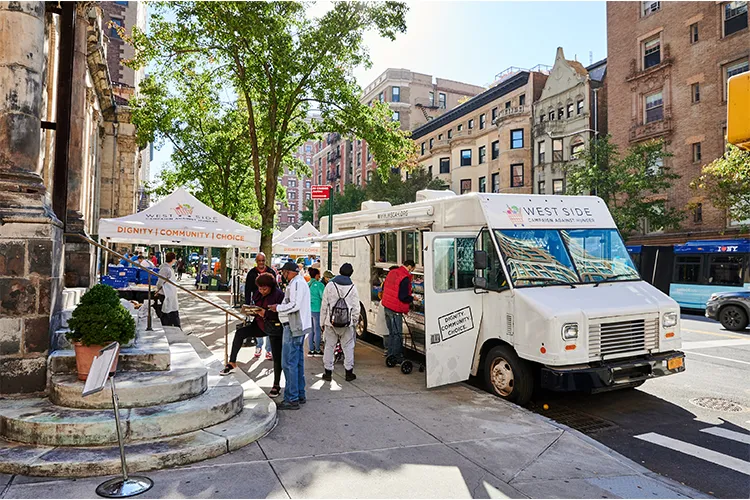
When the COVID-19 pandemic hit New York City in early 2020, many organizations were forced to close their doors. West Side Campaign Against Hunger (WSCAH) didn’t.
“WSCAH never shut down...not for a single day,” said Kira Garfinkel, Senior Development Manager at WSCAH. “We had to completely change the way we did our work, quite literally overnight.”
Founded in 1979, WSCAH has long been a pioneer in reshaping how New Yorkers access emergency food. Since 2019, Columbia Community Service has provided $74,000 in grants to WSCAH to combat food insecurity. Today, the need is greater than ever before.
In New York City, 1.4 million people face food insecurity (defined as "when people don't have enough to eat and don't know where their next meal will come from"), and there are 1.8 million Supplemental Nutrition Assistance Program (SNAP) participants. Food pantry utilization is twice as high as pre-pandemic levels.
In Columbia Community Service's service area alone, food insecurity ranges from 15 to 36 percent of households. Put another way, one in seven people you pass on the subway platform is food insecure.
Food insecurity and hunger are only likely to increase into 2026. The federal government shutdown threatens to delay or suspend SNAP payments beginning in November, which will only compound the impact of sweeping cuts enacted earlier this year. State governments are struggling to fill the funding void on multiple fronts.
In the face of such need, we sat down with Garfinkel to learn more about WSCAH's work, the state of hunger in 2025, and how Columbians can get involved.
For those who might not know WSCAH, how would you describe your work?
WSCAH was founded in 1979 and created the first customer-choice food pantry in the country. Instead of handing people pre-packed bags, we built a supermarket-style pantry where customers use a point system to choose what they need: proteins, grains, fruits, and vegetables.
That model has since spread across New York City and even beyond. We’ve helped other pantries across the country set up similar systems.
WSCAH never closed during the pandemic. How did you adapt?
When COVID hit, we had to completely pivot. The pantry used to be indoors and staffed largely by older volunteers, so we moved outside and eventually shifted to include mobile food distribution.
Does it make sense for people to come to food—or should we bring food to people?
The big question became: Does it make sense for people to come to food—or should we bring food to people? That’s what shaped our direction moving forward.
Since 2020, we’ve maintained about two dozen community distribution sites across Northern Manhattan and the South Bronx. This year, we plan to add six new distributions in these neighborhoods, so that every customer who used to travel down to the 86th St. pantry can pick up food near home. We expect this could save WSCAH customers more than $100,000 in transit costs, and as many as 60,000 hours of travel time annually.
Tell us more about the 'community hub' model.
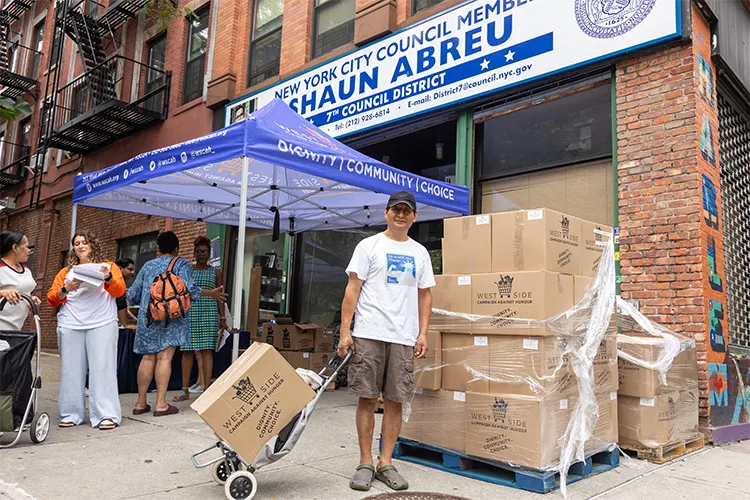
We partner with local organizations (like Columbia University Vagelos College of Physicians and Surgeons and NewYork-Presbyterian's Food FARMacia program, Montefiore, NYCHA housing complexes, senior centers, and social service agencies) to distribute food right where people already live and work.
Rather than every organization having to run its own pantry, we provide the logistics, food, and systems to make it possible. The goal is to limit the time people spend accessing these resources because they have better things to do with their time, frankly.
How has the hunger landscape changed since 2020?
The issues we’re seeing didn’t start with the pandemic—they go back to the 2008 recession. What’s different now is who is facing food insecurity.
About 15 percent of pantry users in New York City are fully employed, compared with just five percent a few years ago. Something is fundamentally wrong with the way things are working in our city. If you’re working full-time, you should be able to afford basic needs like food.
During the pandemic, there was this huge public health crisis, and there was so much attention and resources being redirected to helping people really on the margins. We didn't see huge increases in food insecurity during the pandemic, even though we saw increases in usage of food pantries. But when those expanded programs ended in 2023, need surged again.
It's the same drivers that have been there since 2008. It is rent and cost of living being high, wages not keeping pace. That's what makes current changes in federal funding extremely disturbing.
How do you see hunger affecting the neighborhoods around Columbia?
Hunger isn’t always visible. You are not going to be able to identify it by looking at someone. It’s not just people who are unhoused or unemployed—it’s families, students, and working adults. One in seven New Yorkers faces food insecurity, and that includes people in Morningside Heights, Manhattanville, Harlem, and Washington Heights.
Nationally, about 20-25 percent of college students experience food insecurity. Even at schools like Columbia, students on financial aid or international students can struggle to afford meals.
When we talk about hunger, we’re talking about people you might pass on campus, in the library, or on your walk home.
So when we talk about hunger, we’re talking about people you might pass on campus, in the library, or on your walk home.
What role does fear play in accessing food right now?
We’ve been hearing more from clients who are afraid to travel across the city—whether because of immigration enforcement, safety concerns, or general anxiety about being out.
If food can be sent to our home, or if you can pick up food two blocks away instead of taking a 40-minute train ride, that’s not just convenience—it’s peace of mind. Local access alleviates the stress of accessing those resources.
WSCAH has grown while cutting costs. How did you do that?
We opened a new warehouse in January 2024, which lets us store more fresh produce and buy in bulk. We’re also a founding member of The Roundtable, a collaborative of nine food access organizations across New York City. Together, we buy staple products, like milk and grains, at a large scale, saving 30-35 percent compared to individual purchasing.
It’s a great example of what collaboration can do. The more we share resources, the more efficiently we can feed people.
How can members of the Columbia community get involved?
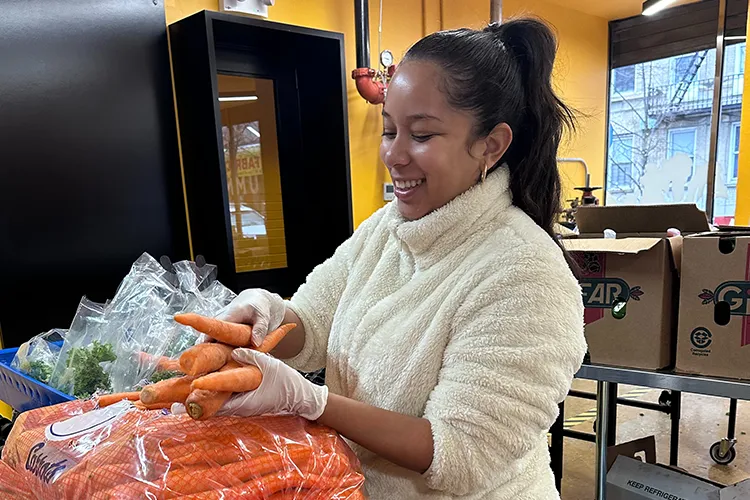
We welcome volunteers at our West 86th Street site Tuesday through Friday, 9 a.m. to 1 p.m. Volunteers can help unload trucks, pack boxes, and distribute food. We also need help at our community hub sites in Northern Manhattan and the Bronx.
What difference can a small donation make?
A huge difference. Frontline organizations like ours can’t rely on state or federal or even city funding right now—we depend on individual donors. Every contribution, whether $50 or $500, adds up to thousands of annual gifts that keep our programs running.
It’s not just about frontline work; it’s about building a more resilient, sustainable system for the city that also addresses the underlying causes of food insecurity. And honestly, no donation is too small. Every dollar matters.
What keeps you hopeful?
If everyone looks around and thinks, "someone else will step up," we’re in trouble. But if everyone says, "I’ll step up too," we’ll get through this...and maybe come out stronger.
If everyone looks around and thinks, 'someone else will step up,' we’re in trouble. But if everyone says, 'I’ll step up too,' we’ll get through this.
What gives me hope is seeing people care. Volunteers, donors, partners, neighbors—everyone doing what they can. We’re all being asked to do more with less, but when communities come together, it makes all the difference.
Learn more about West Side Campaign Against Hunger at wscah.org.
Please continue to support the work of wonderful CCS grantees like WSCAH, and donate to Columbia Community Service today. Any amount will make a difference.