‘There’s No Us and Them’: Ricardo Morales on Community Service and Showing Up for One Another
Morales has been a tireless advocate for CCS over the years—most recently, encouraging a departmental donation from Columbia Public Safety.
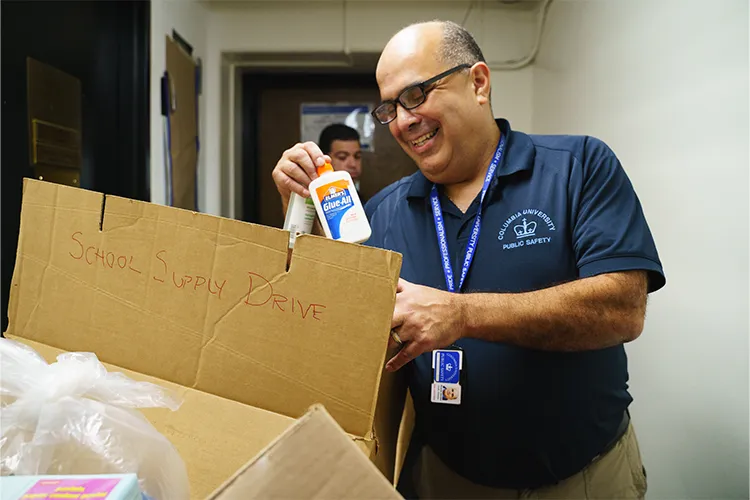
Everyone is a brother or a sister to Ricardo Morales, Assistant Director for Community Engagement with Public Safety. It’s how he approaches life. And how he approaches his work at Columbia University, where he has built a 40-year career grounded in service, safety, and care for others.
On his way to work one recent winter morning, Morales saw a barefoot man standing in the cold with only a sheet wrapped around him. Morales pulled over. He gave the man a coat and a pair of shoes he had in his car (clothing he was bringing to work for the Columbia Community Service winter clothing drive), helped him put them on, and made sure he knew where to find food and support.
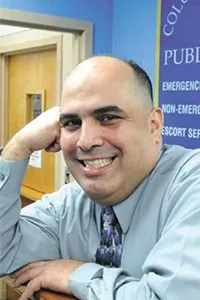
That instinct to stop, to help, to treat everyone with dignity, guides Morales’ work on campus and beyond.
“I started here when I was 18 and worked my way through the ranks, first as a security officer working the midnight shift, to becoming the youngest-ever sergeant, and working all over the university, getting promoted along the way,” Morales said. “Now I’m in charge of community engagement, which is a part of crime prevention, but I wear many hats.”
Morales is a decades-long supporter of CCS, contributing not only time and resources, but creative, relationship-driven approaches to community partnership.
“We're always looking to make things better for the community," Morales said. "We always want to take it to the next level.”
Recently, after a run of meaningful departmental participation in the CCS holiday toy drive and coat drives (providing all drop-off locations!), as well as helming Columbia's participation in the 10th annual community backpack drive and facilitating Thanksgiving meal donations at The Forum, Morales was inspired to step up once more in a big way: Advocating for a year-end donation to be made to the 79th CCS Annual Appeal by the Department of Public Safety itself. And they did, for which CCS is most grateful.
We decided we wanted to learn more about Morales, what inspires him to be involved, and how he developed his dedication to community service. Read on to find out.
What does your work at Columbia look like day-to-day?
Besides community engagement, I’m also responsible for equipment (emergency equipment, equipment for our officers), bicycle patrol training, stuff like that.
But day-to-day, it’s interacting not only with students, faculty, and staff. We interact with our brother and sister schools around us (Barnard, Teachers College, JTS, UTS, Manhattan School of Music, Mount Sinai Hospital), sharing information. What’s going on over there? What’s going on here? We also have that agreement that we help everyone, no matter what school or institution you come from, or members of the community.
I also interact with community boards and the police department’s community affairs departments. Seeing what they need. Is there something we can help with? Something we can help promote?
How does this work connect to the surrounding community?
We bring self-defense classes into the community. We help with food distribution. We work with food banks. The last one was for Thanksgiving. It was awesome. We gave out turkeys, stuffing, all the things that come with that, right here on the Manhattanville campus at The Forum.
We also do back-to-school drives, toy drives, and coat drives. I’m always looking to make things better. Recent NYPD crime statistics show a reduction in crime in NYC, and numbers are important, but I need to see it in the community. Quality of life is important to me. Whether it’s food, clothing, information to help people get back on their feet, whatever it is, I want to help.
You often say ‘there’s no us and them.’ What do you mean by that?
Whether you’re a student, faculty, staff, or a member of the community, we help everyone. There is no such thing as “You’re not from Columbia, I can’t help you out." We work together for a safe campus and community.
Columbia has always been recognized as one of the safest urban schools in the United States. Independent studies show that. A lot has to do with getting the community involved.
There is no such thing as "us" and "them." We want people to know where they can go if they need help: Safe Havens (local stores with red lion stickers in the window) and 24-hour security booths where students, faculty, staff, and members of the community can go if they need help.
It’s a constant collaboration with everybody to make things better.
What experiences shaped your commitment to community work?
The church. I’m a big church guy. The churches I work with feed people, help people. That’s what they’re supposed to do.
I interact with churches in the Bronx, where I’m from, and that’s where I get a lot of these ideas. It’s a feel-good feeling when you help people who need help.
There was a woman at a turkey giveaway who told me she sent her nurse’s aide to the store to buy turkey wings because she couldn’t afford a full turkey. That broke my heart. Moments like that, where we can provide actionable help, encourage me.
I’ve always believed in helping neighbors. Even something simple like cleaning the front of a neighbor's house. I want to show people it’s okay to help each other.
What brought you to Columbia—and what made you stay?
I was very active in the auxiliary police program growing up. Always looking to help people.
I met someone when I worked in security at Merrill Lynch who saw how I worked and sent me to interview at Columbia. I got the job, and I always say I hit the New York City lottery.
I got the job, and I always say I hit the New York City lottery.
Columbia invested in me. They sent me to John Jay. They sent me to training in other states. I became the youngest sergeant after a year and a half.
They saw the energy I had and sent me out to bring new ideas back. I tell new hires the same thing—I hit the New York City lottery, and I still feel it today. I’m very grateful.
How did you first get involved with CCS?
It started with toy drives connected to the President’s Office, but then I met Joan Griffith-Lee [Director of CCS].
I loved all her ideas. She knows the right people. She tells me how we can help, and I’m like, "man, that’s a great idea." It grew from there.
How did your work with the back-to-school backpack drive begin?
It’s been 10 years now! We worked with the 26th Precinct's Community Affairs Unit, Columbia Facilities, and CCS. Back in the beginning, construction companies working on the Manhattanville campus donated trucks full of backpacks with supplies, in addition to donations from our Columbians.
We help set up a big fair every August. Help setting up haircuts, hair braiding, and food for the kids. Everyone brought someone to help out. It’s been a success every year, right at 126th Street and Old Broadway.
How do these community partnerships come together?
I’m constantly researching ways to help, constantly interacting with community boards and the police department.
If I see an organization that needs help, I reach out to CCS. We start working together and get it done.
Sometimes it’s food. Sometimes it’s clothes. Sometimes it’s TVs, computers, or whatever departments are willing to donate as they change technology. We ask, "Who needs this?"
What advice would you give to other Columbians?
When people see us promoting community service (be it through pictures, emails, newsletters, and social media), they jump on board.
The majority of Columbians have beautiful hearts. Hearts of gold. They want to help. When they see the love we have for the community, they want to do the same.
What keeps you going?
I enjoy coming to work and interacting with people every single day. I have near-perfect attendance. I enjoy giving back and seeing the projects I've worked on blossom.
We also have an awesome Public Safety team here at Columbia, and we all work together with the same goal: make people feel safe starting day one. We don’t wait for things to happen.
We want to make people feel like family. That’s what this is about.